Showing posts with label Australia. Show all posts

Thursday, August 30, 2018

Eucalyptus conferruminata - Spider Gum or Bushy Yate

split from Eucalyptus lehmanii  

Eucalyptus conferruminata: Eucalyptus from the Greek, meaning “well-covered,” referring to the fused lid over the flower before it opens (called an operculum); conferruminata meaning "joined together," referring to the seed pods being fused together in clusters.


Shrubby multi-trunked tree or mallee


developing fruits

Fruits have exserted valves; tips remain fused even after seeds have been released

Saturday, May 8, 2010

Brachychiton populneus - Bottle Tree

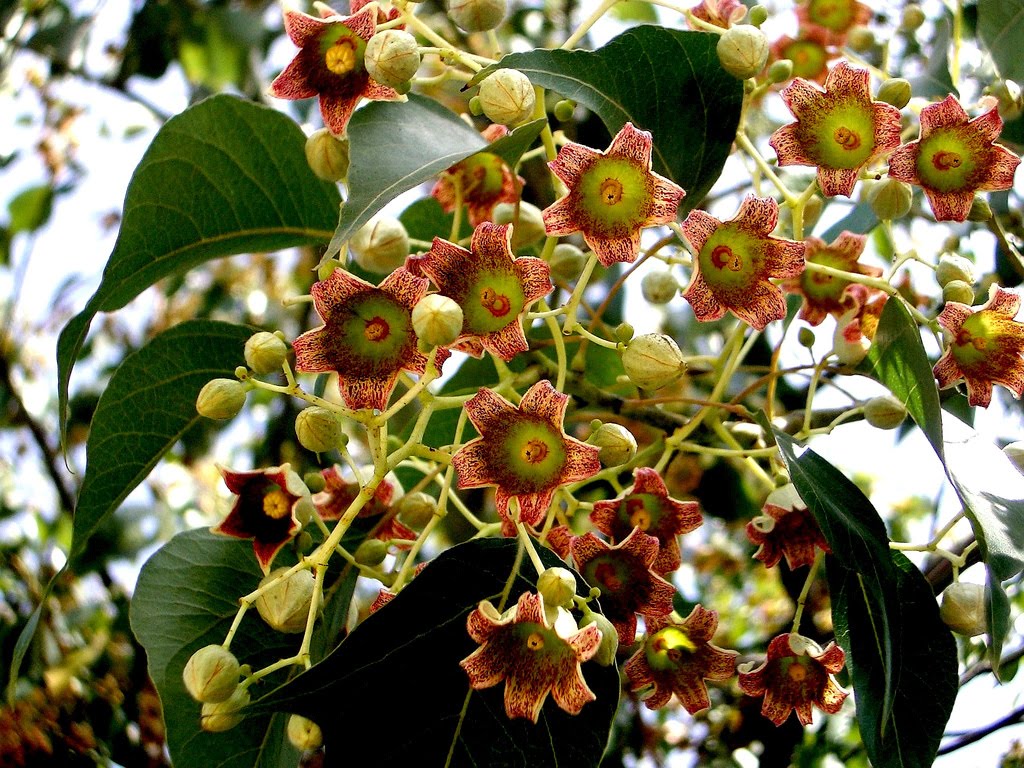
The bottle-like taper to this tree's trunk gives it its common name.

Ovate to palmately lobed leaves have long petioles, allowing them to quake easily in the wind.

Small (3/4") creamy yellow bell-shaped flowers have a reddish throat. Flowers are present May through July.

Flowers held in terminal 4"-6" panicles.

Fruits are pointed woody ovoid follicles held palmately in clusters of five or more. Follicles are densely hairy inside and burst open along one seam to expose light colored oval seeds. Fruit is present in late summer.

Smooth green, darkening to brown bark with white furrows.

Friday, May 7, 2010

Agonis flexuosa - Peppermint Tree

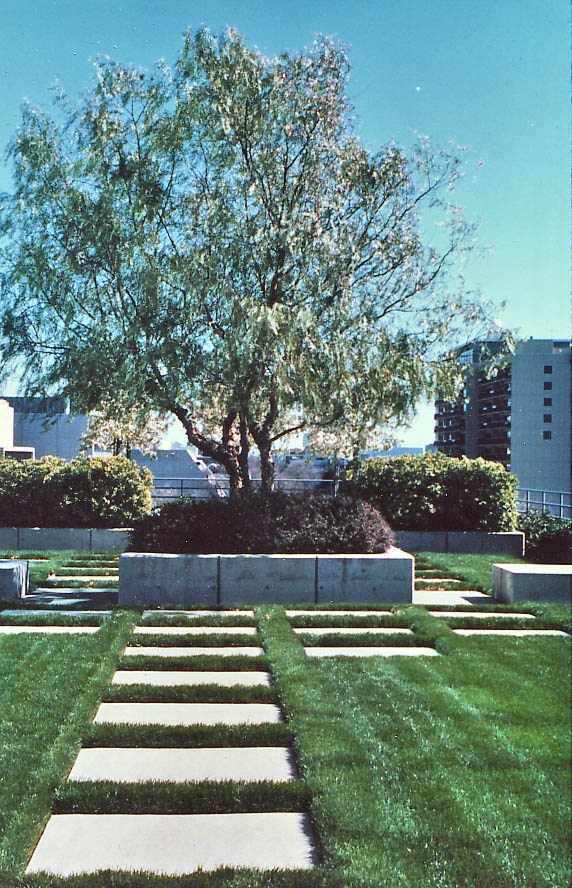
A weeping, irregularly shaped tree.

Simple lanceolate leaves 3"-6" long exude a peppermint odor when crushed..

Many tiny white star-shaped flowers in summer.

Stemless woody brown fruits are aggregate clsters of 3-valved capsules. Capsules can remain in leaf axils throughout winter.

Coarse dark brown fissured to shredding bark.

Thursday, May 6, 2010

Acmena smithii - Lilly-Pilly Tree

Related to Syzygium paniculatum which it resembles except for form and fruit color.

White flowers in late summer are clusters of stamens only.

Flowers are held in panicles.

Showy pink edible berries in summer and fall.

Simple ovate leaves with acuminate tips.

Wednesday, April 14, 2010

Tristaniopsis laurina - Water Gum

Tristaniopsis laurina: Tristaniopsis, named for Jules Tristan, French botanist; laurina, resembling the laurel tree.

Also known as Tristania laurina, Laurel Leaf Box.


Clusters of small (1/8 - 1/4") yellow 5-petaled flowers somewhat fragrant in April and May.

Thick leathery leaves.

Newest twigs look black.

Attractive thin mottled bark peels in irregular flakes to reveal light tan or whitish underbark.

Tuesday, April 13, 2010

Fraxinus angustifolia oxycarpa 'Raywood' - Raywood Ash

Fraxinus angustifolia oxycarpa: Fraxinus is the classical Latin name for the ash tree; angustifolia, having narrow leaves; oxycarpa, sharp seed.

Also known as F. a. 'Raywood' and F. o. 'Raywood'

Species is native to southwestern Europe.
'Raywood' is a male cultivar native to Australia which sets no seed.

Upright oval form.

Lanceolate leaves.


Smooth grey bark.

Acacia baileyana - Bailey Acacia

Acacia baileyana: Acacia, Greek name for one species of acacia; baileyana, named for one of four botanists named Bailey -- not sure which.

A.b. 'Purpurea' has leaves with a purplish cast.


Bipinnately compound leaves are much smaller than A. dealbata, A. longifolia, or A. melanoxylon.

Yellow flowers in round clusters of stamens, similar to A. dealbata and A. melanoxylon. Compare to A. longifolia's longer flower clusters.

Pea-like seed pods typical of Fabaceae.

Monday, March 29, 2010

Geijera parviflora - Australian Willow

Geijera parviflora: Geijera, after J.D. Geijer, a Swedish botanist; parviflora, meaning small-flowered.


Linear leaves with a distinct, protruding midrib.

Tiny white flowers in panicles.

Eucalyptus ficifolia - Red-flowering Gum

formerly known as Corymbia ficifolia

Eucalyptus ficifolia: Eucalyptus from the Greek, meaning “well-covered,” referring to the fused lid over the flower before it opens (called an operculum); ficifolia meaning 'with leaves like a fig.'


Saturday, March 20, 2010