Tuesday, October 5, 2010

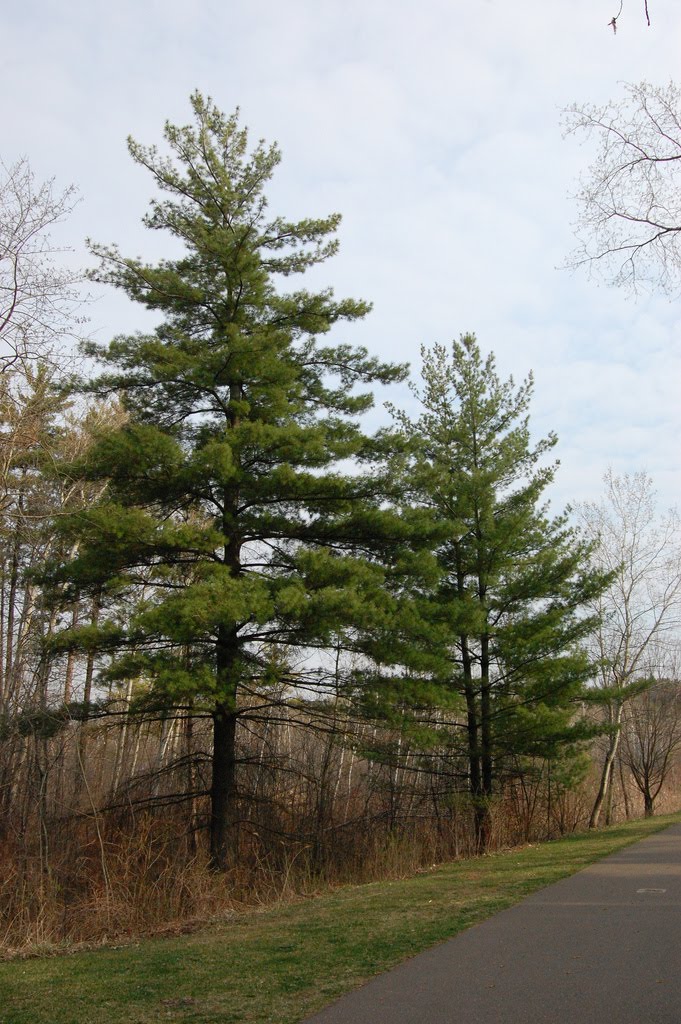
Pinus strobus - Eastern White Pine

Pinus strobus: Pinus is the Latin name for pine; strobus is Latin for pine cone.

Native to the north-eastern U.S. from Georgia and Iowa to Illinois and in Canada from Newfoundland to Manitoba.

Growth rate slow, becoming faster to 50-80' tall and 20-40' wide, dense, straight-branched, and conical in youth, broadening with age to a more open, picturesque form with irregularly drooping branches.


Needles are soft, bluish green, 3-5" long, 5-fascicled, twisted, with minute teeth on all sides, whorled completely around branchlets, persisting 3-4 years.


Cones are reddish brown, 3-8" long, slender, long-stalked, with light-tipped scale ends and no spines.


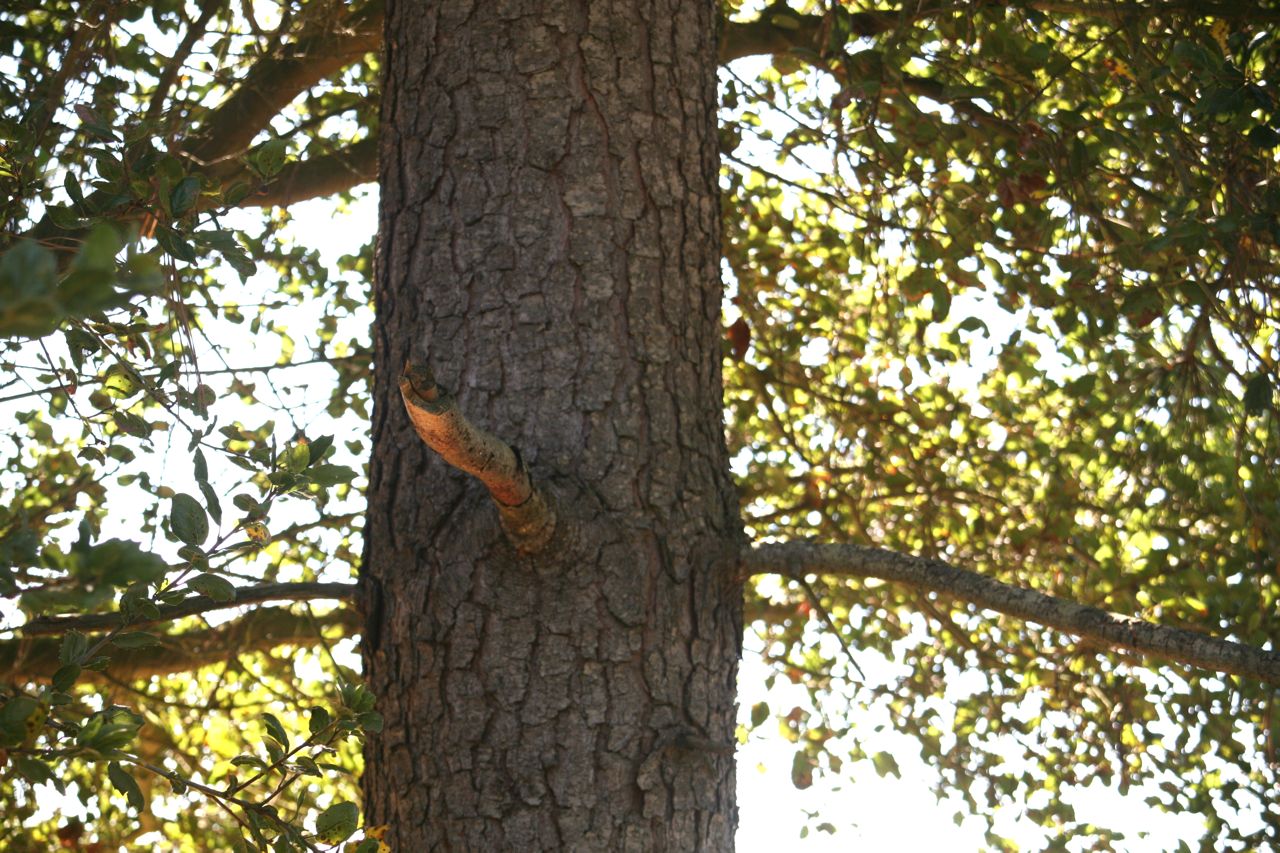
Bark is thin, smooth and light gray, thickening and darkening to grayish brown with rectangular scaly plates.

Monday, October 4, 2010

Sequoia sempervirens - Coast Redwood

Sequoia sempervirens: Sequoia named for the Cherokee silversmith Sequoyah who developed his nation's first writing system; sempervirens is Latin meaning always green, referring to the evergreen foliage.

Native to the Pacific coast of California and Oregon.

Growth rate fast to 70-90' in cultivation and up to 150-300' in habitat. with a 15-30' spread, developing an open pyramidal form and horizontal branching from a large main trunk with a broad base. Commonly cultivated as a long-lived, fast growing evergreen lawn, shade or screen tree.


Foliage sprays of feathery, flat, glossy green, needle-like leaves, 1/2-1" long tightly spaced in an alternate, opposite flat plane along green stems. Needles have slighlty prickly ends, lighter undersides, and persist 3-4 years, clinging to branches 1-2 years after drying to dull brown.


Cones are brown, oval 3/4-1" long, with densely spaced woody scales with crape-like, peltate thickened ends, maturing and opening in fall of the first year, but may persist for several months afterward.


Bark is fibrous, dark brown to cinnamon red, becoming very thick and spongy with age, with deep wide furrows and vertical ridges.

Pinus sabiniana - Grey Pine

Pinus sabiniana: Pinus is the Latin name for P. pinea; sabiniana: is a Latinized form of the name Sabine, for Joseph Sabine, an English naturalist.

Also known as Foothills Pine. This tree is now seldom referred to by its historical (and derogatory) name, Digger Pine.

Native to dry, rocky foothills and valleys in California at or below 1,000-3,000' elevation. Predominant pine in the foothill woodland and chaparral regions, generally below the P. ponderosa belt in loose, scattered groves.

Growth rate fast to 40-80' tall and 30-50' wide. Young trees are usually pyramidal, later developing multiple, irregular trunk leaders and U-shaped forks and taking on an oval form with sparse foliage on slightly drooping branches. Attractive soft-textured pine with a delicate appearance in youth, older trees developing spindly trunks with multiple forks and sparse, wispy foliage.


Needles are soft, bluish gray-green, 7-13" long, 3-fascicled.


Cones are light brown, oval, 6-10" long, heavy and bulky with tan recurving scale tips, maturing in fall of the second year, but may remain attached for years, opening gradually and releasing seeds for a long period. Compare to P. coulteri


P. sabiniana (left) is wider and rounder. P. coulteri (right) is narrower. Both can be enormous! Notice also that the Coulter Pine's cone scale tips are lighter in color than the interior portion of the cone scale, compared to the Grey Pine's darker cone scale tips.


Bark is dull gray, darkening and thickening with age, becoming roughly furrowed with scaly ridges. The bark of this foothill pine (Pinus sabiniana) is oozing a sticky, golden pitch. Such pitch was chewed like gum by the Wappo natives in the region in and around what is now Bothe-Napa Valley State Park. The tree’s cones were used as fire starters, and the nuts were harvested for food.

Wednesday, September 22, 2010

Pinus torreyana - Torrey Pine

Pinus torreyana: Pinus is the Latin name for P. pinea; torreyana, named for John Torrey, an American botanist, after whom the coniferous genus Torreya is also named.

Compare to P. coulteri and P. sabiniana.

Native to the San Diego coast of southern California. Rarely cultivated, but adapts well to inland or high desert conditions, tolerating heat and moderate drought.

Growth rate moderate to 40-60' tall by 30-50' wide, developing a broad conical form with stout branches, becoming somewhat irregular or prostrate in windy coastal areas.


Needles are dark bluish to gray-green, 7-11" long, 5-fascicled, clustered in large bunghes at branch tips, persisting 3-4 years.


Needles are similar in length to P. coulteri, but are in fascicles of 5 (vs. 3 for P. coulteri), and P. torreyana's cones are much smaller (see below).


Cones are dark brown 4-6" long, oval with a flat base, attached strongly to branches with a thick, short stem, ripening in summer of the third year. Scales have a thickened triangular apex with short, fat recurving spines. Dark brown seeds 1/2 - 3/4" long are released over a long period of time.


Bark is thick, dark brown, becoming broken into ridges with wide, fattened, reddish brown scales.

Pinus coulteri - Coulter Pine

Pinus coulteri: Pinus is the Latin name for P. pinea; coulteri, named after John Merle Coulter, an American botanist.

Also known as Bigcone, nut, or pitch pine.

Native to dry rocky slopes of the inland coastal ranges of southern and central California. Rather uncommon pine scattered in ares of chaparral, mixed coastal pine forest, and oak woodland.

Grows to 30-80' tall with a 20-40' spread, developing an oval form, often with distinct horizantal spreading branches with upturned ends, and a short, stout trunk. Fuller than P. sabiniana.


Needles are stiff, dark bluish green, 5-12" long, 3-fascicled.


Cones are tan 9-14" long, weighing up to 5 pounds, elliptical to oblong-ovoid, short-stalked, with thick scales terminating in recurving horns, develoing in summer, maturing in 2 years, persisting on trees 5-6 years. Compare to P. sabiniana.


Cones are often covered in resin. Notice how thick the needles are.


Bark is dark brown to black, furrowed, with broad scaly ridges. Branchlets are very stout and rough orange-brown.

Tuesday, September 21, 2010

Pinus contorta contorta - Shore Pine

Pinus contorta contorta: Pinus is the Latin name for P. pinea; contorta or 'twisted,' referring to the species' twisted needles.

See also: Pinus contorta murrayana or Lodgepole Pine.

This subspecies is native to the Coast Ranges and coastal meadows from Mendocino County, California to Alaska.


Moderate growth rate to 35' tall and wide. Irregular, dense, often rounded or pyramidal crown with many-forked, short branches often extending to the ground. P. contorta contorta is shorter than P. contorta murrayana.


Shiny dark green needles 1.25-2" long, 2 per fascicle, often twisted.


Female cones are light tan, ovate 2" long. Cones are variably serotinous -- need fire to open.


Orange-red pollen cones 5-15mm long.


Scaly dark brown bark becomes furrorwed with age.

Sequoiadendron giganteum - Giant Sequoia

Sequoiadendron giganteum: Sequoiadendron for its similarity to the wood of the Sequoia genus, named for the Cherokee silversmith Sequoyah who developed his nation's first writing system; giganteum giant.

Also known as Sierra Redwood.
Synonyms: Sequoia giganteum, Wellingtonia gigantea

Dense, pyramidal or conical form in the landscape to narrow columnar form in dense mature groves. Symmetrical branches generally horizontal to downward-sweeping with upturned ends.


Narrow, gray-green, flat, lance-like leaves with prickly ends, forming round, rope-like foliage sprays of short, overlapping scale-like needles. Opposite or alternate arrangement.


2-3" long cones mature to dark reddish brown in the second year, but may persist on the tree. Wide, oval cone scales.


Thick, cinnamon red to dark reddish brown spongy, fibrous bark with large ridges and deep, vertical, interconnected furrows.


Large central trunk with a broad, buttressed base. Trees grow up to 300' (90m) with trunks to 35' (11m) diameter.


Per Conifers.org, Sequoiadendron only occurs in groves, so that every place it can be seen, it is found within the native mixed conifer forest as a unique, insular stand of gigantic trees. The stature of the trees, despite their occurrence within one of the world's most impressive mixed conifer forest, is literally awe-inspiring.

Native to the western slopes of California's Sierra Nevada from Placer to Tulare counties at 4,500 to 8,000' elevation.